
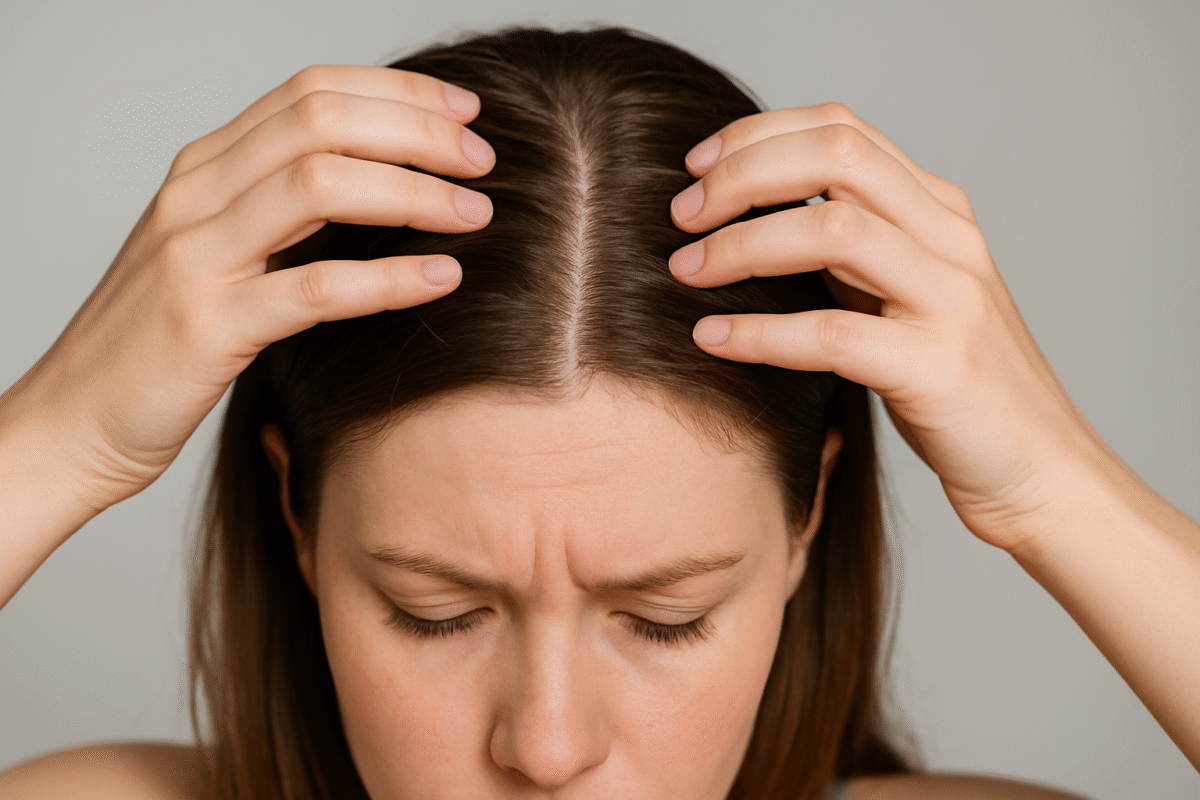
If your scalp is itchy, flaky, or irritated, it can be surprisingly hard to figure out what’s actually going on. Is it just dandruff? Is it eczema? Could it be psoriasis? These conditions can look almost identical at first glance, especially during flare-ups — but they behave differently, feel different, and require different approaches to care.
This guide breaks down the simple, practical differences no one explains clearly, helping you identify what’s happening on your scalp and what steps might help you find relief.
The Biggest Difference: Why the Scalp Is Reacting
Before looking at flakes or redness, it helps to understand the underlying factors.
• Dandruff is usually caused by excess oil, yeast imbalance, or skin sensitivity.
• Scalp eczema is driven by irritation, allergies, or an overreactive skin barrier.
• Scalp psoriasis is an immune-driven overproduction of skin cells.
This is why two people with “flaky scalp” might have completely different underlying conditions.
1. How the Flakes Look
This is often the first — and easiest — clue.
Dandruff flakes
• white or yellow
• greasy or oily
• come off easily
• often sit on the hair strands or shoulders
Dandruff flakes are usually soft and linked to excess oil.
Scalp eczema flakes
• white
• fine and powdery
• often mixed with redness or irritation
• may appear around the ears, hairline, or neck
Eczema flakes come from dryness and inflammation, not oil.
Scalp psoriasis flakes
• thick
• silvery-white
• layered or “plate-like”
• more stubborn and attached firmly to the scalp
Psoriasis scales are noticeably thicker than eczema or dandruff.
2. The Itch: What It Actually Feels Like
Itch gives important clues.
Dandruff itch
• mild to moderate
• often feels better after washing
• tends to flare when the scalp is oily
Scalp eczema itch
• intense
• can feel deep and urgent
• worsens with heat, sweating, or stress
• scratching often leads to irritation or clear fluid
Scalp psoriasis itch
• may burn or feel hot
• can be painful, not just itchy
• scratching can cause bleeding (“Auspitz sign”)
Psoriasis itching often comes with soreness or tightness due to the thick plaques.
3. Redness and Irritation
How the scalp looks underneath the flakes can also help.
Dandruff redness
• mild
• patchy
• improves quickly with anti-dandruff shampoo
Eczema redness
• more inflamed or raw
• may involve the hairline, neck, or behind the ears
• may show cracks or weeping in severe cases
Psoriasis redness
• bright, defined, and thick
• plaques tend to be well-outlined
• may extend beyond the hairline
Psoriasis plaques often feel raised when you run your fingers over them.
4. Location Patterns
Where the symptoms appear offers major clues.
Dandruff
• mainly on the top of the scalp
• usually doesn’t affect other body areas
Scalp eczema
• around the hairline
• behind the ears
• neck and upper back
• may appear alongside face or body eczema
Scalp psoriasis
• thick patches on the scalp
• extending beyond the hairline
• behind the ears
• along the nape of the neck
• may appear on elbows, knees, or nails
If there are nail changes (pitting, thickening), psoriasis becomes far more likely.
5. How the Scalp Responds to Washing
How your symptoms react to shampoo can be revealing.
Dandruff
• improves quickly
• flakes reduce after a wash
• responds well to anti-dandruff shampoos
Scalp eczema
• may feel worse with frequent washing
• flares with fragranced or harsh products
• improves with gentle, fragrance-free, barrier-supporting care
Scalp psoriasis
• doesn’t go away with normal shampoos
• thick plaques persist even after washing
• medicated shampoos may help but relief is slower and more limited
If washing temporarily helps but flakes return fast, it may not be dandruff.
6. Stress and Immune Triggers
Stress plays a big role — but differently.
• Dandruff: flares with stress-related oil production
• Eczema: flares with nervous system activation and skin sensitivity
• Psoriasis: flares through immune activation and inflammation
Psoriasis may also flare after illnesses, injuries, or certain medications.
7. Telltale Signs That Point to Each Condition
Here’s a quick summary:
Likely dandruff if:
• flakes are oily or yellow
• itching is mild
• symptoms improve fast with shampoo
• scalp isn’t very red or painful
Likely scalp eczema if:
• redness and irritation are prominent
• itch is intense, especially in heat
• flakes are dry and fine
• you have eczema elsewhere on the body
Likely scalp psoriasis if:
• plaques are thick, raised, or silvery
• flaking is stubborn and layered
• there is burning or tightness
• symptoms extend beyond the hairline
• nails show pitting or discolouration
When to Seek Help
If your scalp:
• becomes painful
• bleeds frequently
• develops cracks or infection
• flares repeatedly despite over-the-counter products
• is too itchy to sleep
• shows thick plaques or stubborn scales
…it’s time to get personalised support.
Correctly identifying the condition is the key to calming inflammation and preventing flare-ups. Many people live for years treating “dandruff” that is actually eczema or psoriasis — so getting clarity can make a huge difference.
Final Thoughts
Dandruff, scalp eczema, and scalp psoriasis all cause flakes — but the reasons behind those flakes are very different. Understanding how they look, feel, and behave helps you choose the right approach and avoid making symptoms worse with the wrong products or habits.
If you’re struggling with scalp irritation or unsure which condition you have, our Eczema & Psoriasis Clinic in Sydney can help you assess your symptoms, understand your triggers, and create a personalised plan that supports healthy, comfortable skin.
[Book A Consultation Now] | [Contact Us] | [Follow Us on Instagram @eczemapsoriasisclinic]
