
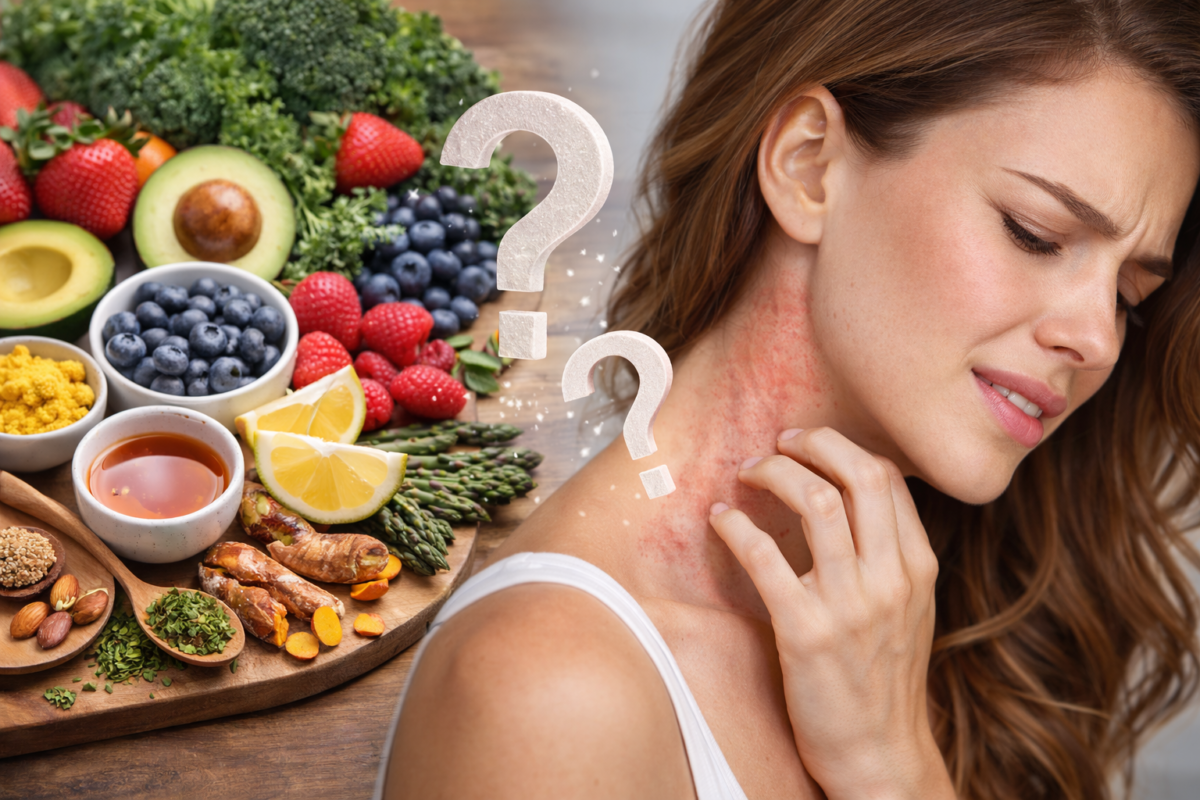
Many people with eczema clean up their diet, remove processed foods, reduce sugar, and increase fruits and vegetables — only to find their skin flares even more.
It can feel confusing. You’re eating “healthy” foods. So why is your eczema worse?
One possible and often overlooked reason is salicylate sensitivity.
In clinic, we sometimes see patients whose eczema improves significantly once high-salicylate foods are adjusted — particularly when histamine sensitivity is also present. While this isn’t the root cause for everyone, it can be an important piece of the puzzle for some.
What Are Salicylates?
Salicylates are natural chemical compounds found in many plant foods. They are part of a plant’s defence system and are present in varying levels in:
• berries
• tomatoes
• avocado
• spinach
• herbs and spices
• citrus fruits
• almonds
• honey
• certain teas
They are also found in aspirin (acetylsalicylic acid), which is where the name comes from.
For most people, salicylates are not a problem. In fact, many salicylate-rich foods are nutritious and anti-inflammatory. However, in some individuals, the body struggles to process them efficiently.
How Salicylates May Affect Eczema
Salicylate sensitivity does not cause eczema directly. Instead, it may increase inflammatory load or trigger immune reactions in those who are already sensitive.
In our clinical experience, people who are more likely to react to salicylates often have:
• chronic eczema
• facial flushing
• night-time itching
• hives or urticaria
• nasal congestion
• sensitivity to fragrances
• headaches alongside skin flares
The key issue is not the food itself — it’s how the body processes it.affects the skin.
The Histamine Connection
Salicylate sensitivity often overlaps with histamine sensitivity.
Histamine is a natural compound involved in immune responses, inflammation, and itch. When histamine levels are elevated or poorly broken down, people may experience:
• increased itching
• redness
• swelling
• flushing
• skin reactivity
Salicylates can influence histamine pathways in some individuals, either by increasing release or interfering with breakdown mechanisms.
This may explain why some people notice eczema flares after eating:
• tomatoes
• berries
• citrus
• fermented foods
• spices
• avocado
These foods are often labelled “healthy” — and they are for most people — but not necessarily for someone with heightened histamine or salicylate sensitivity.
Why This Is More Common Than People Think
In Australia, many people with eczema shift toward high fruit and vegetable intake, smoothies, salads, herbal teas, and plant-based diets in an attempt to improve inflammation.
While these choices are beneficial for many, we sometimes see the opposite effect in individuals with:
• underlying gut imbalance
• high inflammatory load
• chronic stress
• impaired detoxification pathways
• long-term eczema history
If the body is already overwhelmed, adding high-salicylate foods in large quantities may increase the total burden.
Signs You May Be Sensitive to Salicylates
You may want to explore this possibility if you notice:
• eczema flares after eating certain fruits or vegetables
• worsening itch despite eating “clean”
• facial eczema that is hard to calm
• night-time flare-ups
• flushing after meals
• strong reactions to herbs, spices, or essential oils
Importantly, this is not about labelling foods as “bad”. It’s about identifying whether your body is currently able to tolerate them.
Why Elimination Diets Should Be Done Carefully
It can be tempting to remove all high-salicylate foods immediately. However, strict elimination without guidance can:
• increase stress
• reduce diet variety
• create unnecessary fear around food
• worsen gut diversity long-term
The goal is not permanent restriction. It’s temporary investigation to identify triggers and reduce inflammatory load while supporting the underlying systems.
Supporting the Body Instead of Just Removing Foods
Rather than focusing only on restriction, we look at:
• gut health
• histamine regulation
• stress management
• liver and detoxification support
• overall inflammatory balance
As these systems improve, tolerance to salicylates often improves too.
In many cases, once immune and gut health stabilise, people can gradually reintroduce previously reactive foods.
Not Everyone Needs to Avoid Salicylates
It’s important to emphasise:
• Salicylates are not inherently harmful
• Most people tolerate them well
• They are not a universal eczema trigger
• Restriction is not necessary for everyone
This concept applies specifically to a subset of individuals with heightened sensitivity.
Final Thoughts
If you’re eating a very “healthy” diet but your eczema remains reactive, salicylate sensitivity may be worth exploring — particularly if you also experience histamine-related symptoms.
Eczema diet triggers are not always obvious, and what is nourishing for one person may be irritating for another.
At our Eczema & Psoriasis Clinic in Sydney, we take an individualised approach to diet and skin health.
Rather than applying rigid rules, we assess patterns, symptoms, and overall inflammatory load to determine what your body may need right now.
Healing eczema is rarely about removing one single food. It’s about understanding your body’s tolerance, restoring balance, and gradually building resilience.
[Book A Consultation Now] | [Contact Us] | [Follow Us on Instagram @eczemapsoriasisclinic]
