
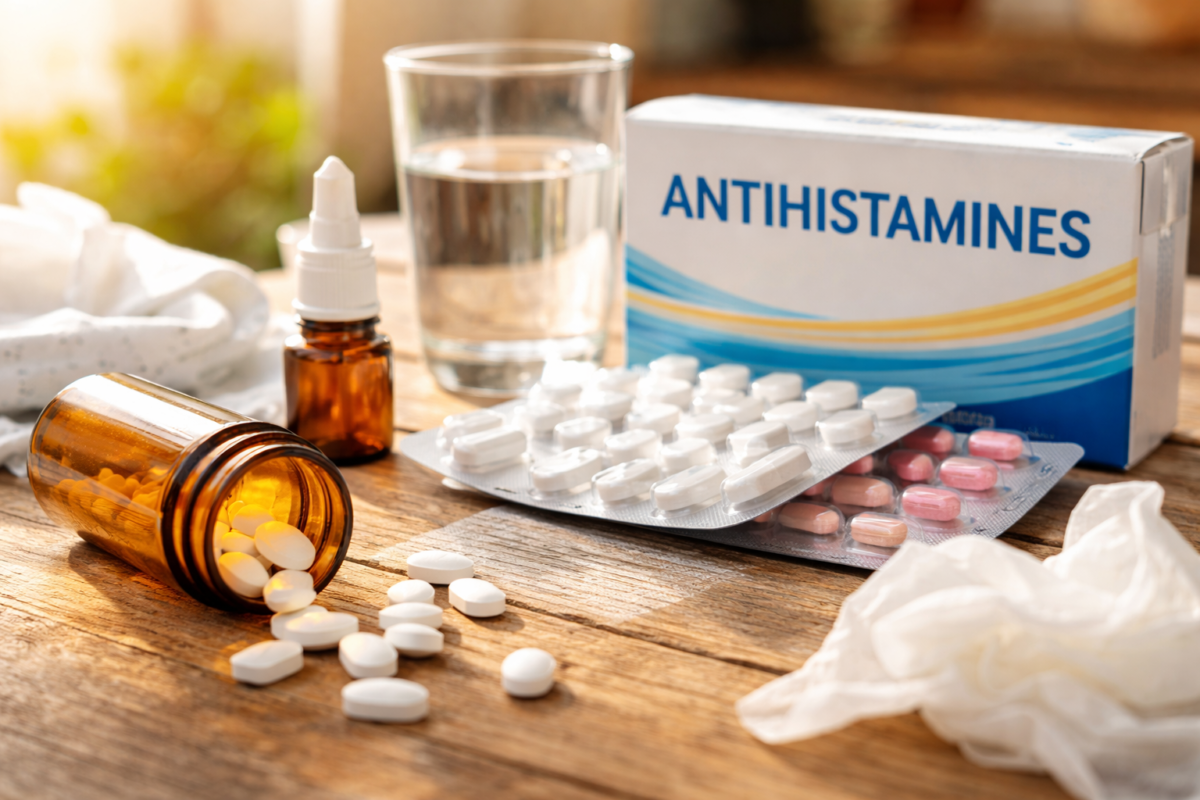
Antihistamines are commonly used for hay fever, hives, eczema-related itch and other allergic conditions. For many people, they provide quick and welcome relief.
But what happens when they are taken long term — month after month, year after year?
For patients struggling with chronic eczema, hives, or skin sensitivity, this is an important question. Because while antihistamines may reduce symptoms temporarily, prolonged use can sometimes create deeper imbalances that affect skin health, immunity and overall resilience.
Let’s explore this more carefully.
1. Chronic drying of the skin barrier
Histamine is not just an “allergy chemical.” It plays roles in immune signalling, circulation and skin barrier function.
Many antihistamines — particularly first-generation types — have anticholinergic effects, which reduce secretions in the body. This is why they commonly cause:
- Dry mouth
- Dry eyes
- Constipation
- Drowsiness
But the drying effect does not stop there.
Long-term use may contribute to:
- Reduced skin hydration
- Impaired barrier repair
- Increased transepidermal water loss
- Greater sensitivity to irritants
For someone already dealing with eczema or compromised skin, further drying can mean:
- More micro-cracking
- More itch
- Slower healing
- A cycle of dependence
You may feel temporarily less itchy, but the underlying dryness can quietly worsen.
2. Drying of mucous membranes and lowered resilience
Antihistamines reduce secretions in the respiratory and digestive tracts as well.
Mucous linings exist for protection. They:
- Trap pathogens
- Maintain microbial balance
- Support immune defence
- Keep tissues lubricated
When mucous membranes become chronically dry, you may see:
- Recurrent sinus irritation
- Increased susceptibility to infections
- Digestive sluggishness
- Heightened sensitivities
Over time, this can contribute to a more reactive immune state — the very thing many allergy sufferers are trying to calm.
3. Potential impact on liver detox pathways
Most antihistamines are metabolised through the liver, particularly via cytochrome P450 enzyme pathways.
Long-term daily use increases metabolic demand on these pathways. While this does not automatically mean “liver damage,” it can:
- Compete with other medications or hormones for detoxification
- Alter metabolic processing
- Increase burden in individuals with already sluggish detox capacity
From a functional perspective, the liver plays a central role in:
- Hormone regulation
- Inflammatory mediator breakdown
- Histamine clearance
- Skin health
If detox pathways are overloaded, inflammatory by-products may circulate longer in the body, potentially contributing to ongoing skin reactivity.
In Chinese medicine, chronic antihistamine use often presents as internal dryness with underlying heat or deficiency — patterns that require systemic regulation, not suppression.
4. Masking symptoms without resolving the root cause
Histamine release is a response — not the original problem.
Common drivers of chronic histamine elevation include:
- Gut dysbiosis
- Leaky gut
- Food sensitivities
- Environmental mould exposure
- Chronic stress
- Hormonal imbalance
When antihistamines are used long term without addressing these drivers, the root imbalance may persist or worsen quietly beneath the surface.
This is why some patients notice:
Skin that becomes thinner, drier or more reactive.
5. Immunity and long-term sensitivity patterns
Histamine is part of immune communication. Blunting that signal chronically may influence how the immune system adapts.
While antihistamines are not “immune suppressants” in the same way steroids are, long-term dampening of signalling pathways may contribute to:
- Altered immune reactivity
- Increased environmental sensitivities
- Slower recovery from infections
- Chronic inflammatory loops
In children especially, we want to be cautious about creating patterns of dependency without supporting immune maturation.
So should you never take antihistamines?
It really depends.
They can be extremely helpful:
- During acute allergic reactions
- During severe hives
- During intense flare-ups
- As short-term symptom relief
The concern is not short-term use, once or twice a year.
The concern is indefinite, repeated use without deeper investigation.
A More Sustainable Approach for Long-Term Skin Health
If you are taking antihistamines daily for months or years, it may be worth exploring:
- Gut health optimisation
- Microbiome support
- Anti-inflammatory diet strategies
- Stress regulation
- Sleep quality improvement
- Liver support strategies
- Identification of environmental triggers
A practitioner experienced in integrative skin health can help you determine:
- Whether antihistamines are still necessary
- Whether dose reduction is appropriate
- How to support the body while tapering
- How to rebuild skin hydration and resilience
Chinese medicine can be particularly helpful in this phase. Rather than simply blocking histamine, it aims to:
- Clear internal heat
- Nourish fluids and blood
- Strengthen digestive function
- Calm the nervous system
- Support detox pathways
When the internal environment stabilises, histamine reactivity often decreases naturally.
And with the right support, it can recover.
The Bigger Picture
If your skin constantly needs suppression, something deeper may be out of balance.
True healing is not about silencing the alarm.
It is about understanding why the alarm keeps sounding.
If you’re relying on long-term antihistamines and your skin is still dry, reactive or worsening, it may be time to look beyond symptom control and towards systemic restoration.
Your skin reflects your internal environment.
And when that internal terrain improves, your skin usually follows.
[Book A Consultation Now] | [Contact Us] | [Follow Us on Instagram @eczemapsoriasisclinic]
