
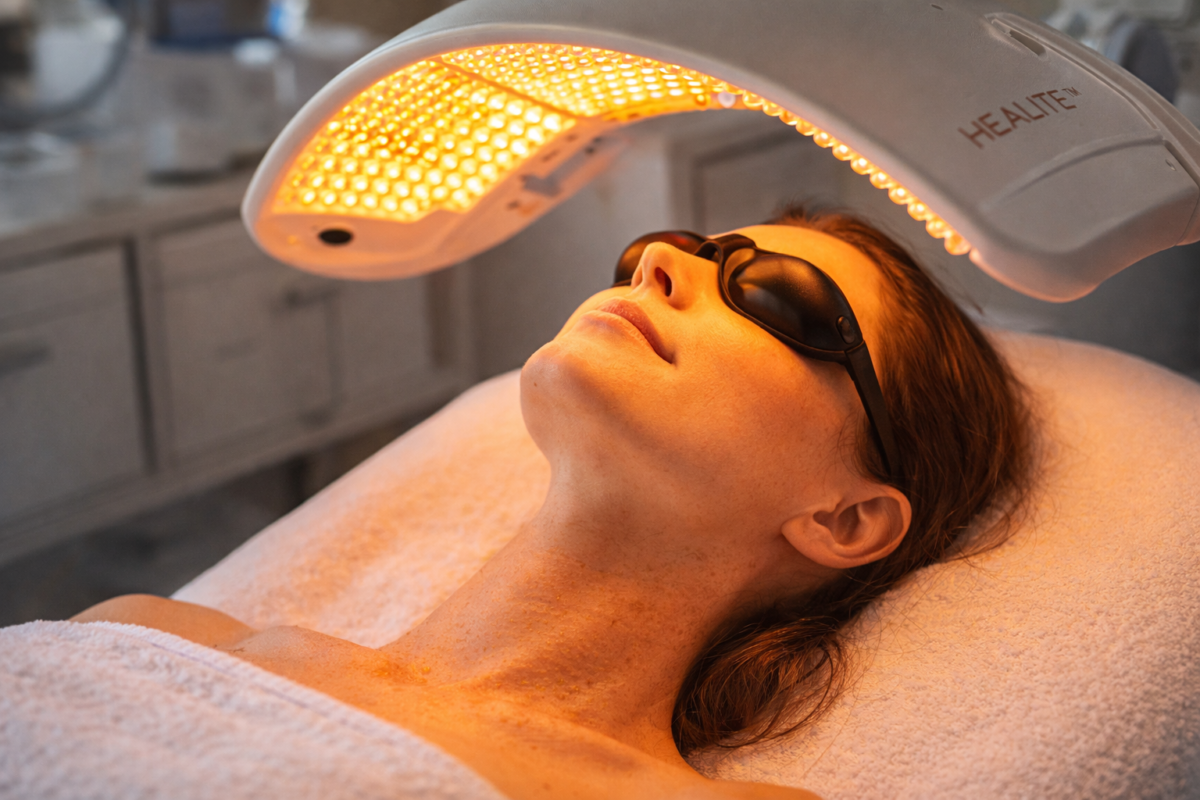
If you’ve been exploring treatment options for eczema, you may have come across LED light therapy — particularly Healite LED. It’s often described as a gentle, non-invasive way to support skin healing, reduce inflammation, and calm flare-ups.
But what does the research actually say — and where does it actually fit in eczema care?
In this article, we’ll break down how LED therapy works, what studies suggest, and how it can be used appropriately as part of a broader approach to skin health.
What Is Healite LED Therapy?
Healite LED is a form of low-level light therapy (LLLT) that uses specific wavelengths of light to interact with the skin.
Unlike UV-based treatments, LED therapy:
• does not burn or damage the skin
• does not rely on UV radiation
• is generally well tolerated
• can be used on sensitive or inflamed skin
Common wavelengths used include:
• red light
• near-infrared light
These wavelengths penetrate the skin at different depths and are thought to influence cellular activity.
How LED Light Affects the Skin
Research suggests LED therapy may support the skin through several mechanisms:
Supporting cellular repair
Light energy can be absorbed by cells, potentially supporting repair and regeneration processes.
Reducing inflammation
Certain wavelengths have been shown to reduce inflammatory signalling, which is highly relevant in eczema.
Improving circulation
LED may increase local blood flow, supporting nutrient delivery and tissue recovery.
Supporting the skin barrier
By calming inflammation, LED therapy may help the skin barrier recover more effectively over time.
What the Research Shows
Research into LED therapy for eczema is still developing, but current evidence suggests:
• LED may help reduce redness and inflammation
• it may support faster skin recovery in some individuals
• it can improve comfort during flare-ups
• it is generally well tolerated, even on sensitive skin
Some dermatological studies on light-based therapies (including non-UV light) have shown improvements in symptoms such as itching and lesion severity.
However, it’s important to keep expectations realistic:
• studies are still limited in size and scope
• results vary between individuals
• LED is not considered a standalone treatment
Where Healite LED Fits in Eczema Care
At our clinic, we do not offer Healite LED therapy directly.
However, we sometimes recommend it as an adjunct tool — particularly for patients who want additional support to calm the skin from the outside while we address deeper underlying factors.
LED therapy can be helpful for:
• calming active inflammation
• reducing redness
• supporting skin recovery
• improving comfort during flare-ups
It can be especially useful during periods where the skin feels highly reactive or slow to heal.
Why It Should Not Be Used Alone
Eczema is rarely just a skin condition.
While LED can support the surface of the skin, it does not address the underlying drivers such as:
• immune imbalance
• gut health
• environmental triggers
• stress and nervous system regulation
• dietary sensitivities
This is why some people may experience temporary improvement with LED, but find their symptoms return if the root causes are not addressed.
In our experience, the best outcomes happen when LED is used as a supportive tool alongside a comprehensive treatment approach.
Healite vs Traditional Light Therapy
You may have also heard of UV-based treatments such as narrowband UVB.
Compared to UV therapy, Healite LED:
• uses non-UV wavelengths
• is gentler on sensitive skin
• does not carry the same UV exposure concerns
• can be more suitable for inflamed or fragile skin
This makes it an appealing option for people who cannot tolerate harsher light treatments.
What Patients May Notice
Patients who respond well to LED therapy often report:
• calmer skin
• reduced redness
• less irritation
• faster recovery after flare-ups
• a soothing treatment experience
That said, results are gradual and typically require multiple sessions.
Healite LED therapy is a gentle, non-invasive option that may help support eczema by calming inflammation and assisting skin recovery.
While the research is promising, it is still evolving — and LED is best viewed as a supportive, not standalone, treatment.
At our Eczema & Psoriasis Clinic in Sydney, we focus on identifying and addressing the underlying drivers of eczema. For some patients, tools like LED therapy can complement this process by helping the skin heal more comfortably along the way.
The goal is not just to calm the skin temporarily, but to support lasting change from both the inside and the outside.
[Book A Consultation Now] | [Contact Us] | [Follow Us on Instagram @eczemapsoriasisclinic]
